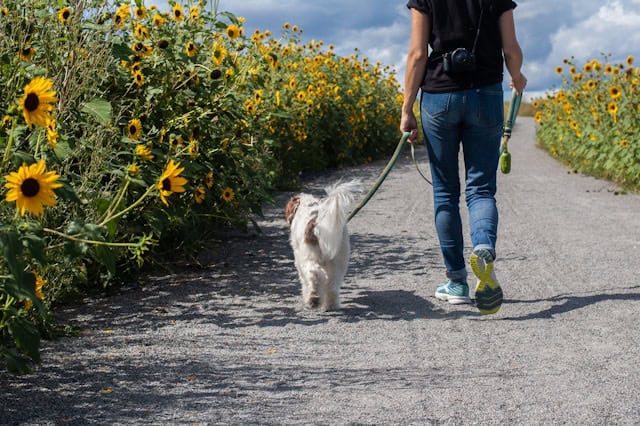
Daily walks shape cardiovascular fitness, joint mobility, digestion, and emotional balance in dogs, yet leash pulling can turn that basic need into a source of strain. A no-pull harness changes how force gets transmitted through the body, often softening the physical burden of each outing. Rather than loading pressure onto the throat, guidance moves across the chest and trunk. That shift can support steadier movement, calmer handling, and a more settled walking rhythm for both dog and person.
Better Control
Pulling often creates a cycle of muscular bracing, leash tension, and hurried correction that leaves both sides frustrated before the route is half done. In that setting, no-pull dog harnesses can improve redirection because leash input reaches the chest first, rather than the neck. That contact point often interrupts forward surges earlier, which helps handlers guide movement through corners, crosswalks, and narrow footpaths with less force.
Less Neck Stress
Neck pressure can compress soft tissue during abrupt starts or fast turns, especially in dogs that lunge with full body weight behind the leash. A harness spreads contact across a broader surface, which may reduce concentrated strain on the trachea and nearby structures. That matters for small breeds, excitable adolescents, and seniors with lower tolerance for sudden loading. Better pressure distribution can make routine outings feel more controlled and less reactive.
Clearer Feedback
Dogs learn movement patterns faster when physical cues arrive in a stable, repeatable way. Chest-led guidance turns pulling into a gentle sideways redirection, breaking momentum without sharp pressure. That pattern gives the animal a cleaner signal about pace, spacing, and body position. With repetition, many handlers notice fewer abrupt corrections and more voluntary check-ins before the dog drives ahead on the leash.
Daily Comfort
Comfort affects gait, respiration, and willingness long before training cues begin to matter. Equipment that pinches, shifts, or rubs can make a dog fidget before the first block. A well-fitting no-pull harness can rest close without constricting the shoulders or rib cage, thereby supporting a natural stride length. Better physical ease often leads to smoother walks, longer tolerance, and less pre-walk agitation during busy mornings.
More Confidence
Handlers often tense their shoulders and grip harder when they expect a strong pull near traffic, bicycles, or unfamiliar dogs. That anticipation can travel down the leash and heighten the animal’s arousal. Better mechanical control may reduce that stress response. As confidence grows, handlers tend to give calmer cues, keep a steadier pace, and create a tone that dogs read with striking sensitivity.
Safer Crowded Areas
Busy settings demand quick adjustments and close handling with very little room for error. Crosswalks, shop entrances, apartment corridors, and school paths all place dogs near moving people or hard edges. A no-pull harness can make those transitions smoother by improving directional influence in tight spaces. That added precision may lower the chance of darts, tangled leashes, or awkward contact with strangers.
Support for Training
Training succeeds more often when equipment supports the lesson instead of working against it. A no-pull harness can reduce the payoff of pulling forward, which creates better timing for loose-leash practice. That change gives handlers more opportunities to reinforce calm steps, reward attention, and build habits that hold up beyond a single quiet block.
Fit Matters
Fit determines whether that support helps or hinders. Straps placed too high can limit shoulder motion, while loose sections may twist during turns. Optimal sizing should allow full breathing, secure contact, and free movement across the chest.
Helpful for Strong Dogs
Large dogs can fatigue wrists, shoulders, and lower backs within minutes if every walk becomes a contest of strength. A front-guided harness offers a greater mechanical advantage than repeated pulling on a collar. Instead of matching force with force, the handler redirects motion through timing and body angle. That shift can reduce joint strain, limit fatigue, and make longer outings more realistic after earlier frustrating experiences.
Better Routine
Consistent, lower-stress walks often support steadier behavior inside the home. Dogs that move well outdoors may settle faster afterward, rest more deeply, and carry less pent-up stress into the evening. A calmer routine can also help handlers stay regular with exercise, which supports human health as well. Over time, that shared predictability often strengthens trust as much as the equipment itself.
Conclusion
A no-pull harness does more than tidy up leash manners during a short outing. It can change the physical and emotional tone of a walk by reducing throat strain, improving directional control, and helping training cues land more clearly. Those gains matter in ordinary life, from quick bathroom breaks to longer neighborhood loops. When handling feels steadier, and movement stays comfortable, the daily walk becomes a healthier routine for both dog and person.