Some days, “self-care” sounds like another assignment you are already behind on. You know movement would help, but the thought of a hard workout feels like too much. You want something lighter, social but not draining, and structured enough that your mind can’t keep replaying the same worries on a loop.
That is where pickleball surprised me. I didn’t fall in love with it because it made me feel like an athlete. I fell in love because, for stretches of time, it made me feel like a person again. Not productive. Not optimized. Just here, watching a bright ball and breathing on purpose.
Why a small court can feel like a big reset
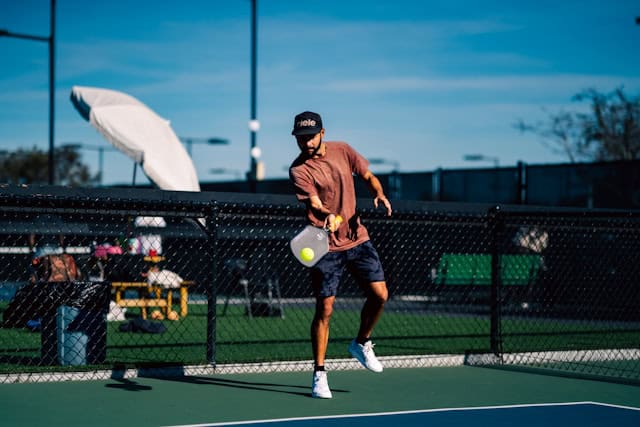
Pickleball asks for your attention in short bursts. You track the ball, read your partner, notice your feet, and then it’s over and you reset. That rhythm is quietly powerful when you are stressed, because it keeps pulling you back into the present without demanding that you be cheerful or “fixed.”
There is also something psychologically kind about the scale. The court is smaller than tennis, so you can get moving without feeling like you are chasing chaos. For many of us, the entry point matters. A manageable physical environment makes it easier to try, especially if you are carrying anxiety, grief, or that low-grade burnout Harness Magazine writers so often name in personal essays.
If you like numbers, keep them simple and supportive. Public health guidelines recommend at least 150 minutes a week of moderate-intensity aerobic activity, plus muscle-strengthening work on two or more days per week. Pickleball can help you accumulate that aerobic time in a way that feels like play, not punishment, particularly if you treat it as a steady habit instead of an all-or-nothing sprint.
The gentle discipline of the rally
Pickleball has built-in mindfulness cues that don’t require you to sit still. The serve asks for a breath. The return asks for patience. The dink exchange, that soft game near the kitchen line, asks you to tolerate discomfort without rushing. It is a conversation, and like any conversation, it goes better when you stop gripping every outcome.
A quick check-in you can do between points
When your nervous system is running hot, your body tends to do the same few things: shoulders creep up, jaw tightens, breath goes shallow. Between points, try three tiny resets. Unclench your teeth. Drop your shoulders. Exhale longer than you inhale. You do not need perfect technique for this to work. You just need a repeatable moment that tells your body, “We are safe enough to keep going.”
Finding a court without turning it into another task
One reason pickleball can support mental wellbeing is that it creates low-pressure community. You show up, rotate in, learn names over time, and your social world expands without the intensity of a formal commitment. If your calendar already feels like a crowded room, that flexibility matters.
If you are starting from scratch, give yourself permission to make it easy. Search for Pickleball courts near me. Then choose a time that feels realistic, not aspirational, and aim for one visit where the only goal is to watch a game and introduce yourself. You do not have to earn belonging by being good.
A small note if social anxiety is part of your story: arrive ten minutes early. It is easier to step into a space before it fills up. Ask one simple question, like what ball people prefer or whether there is an open-play rotation. Most pickleball communities are used to beginners, and the structure of play gives you something to do with your hands and your attention while conversation grows naturally.
Boundaries that protect your joy (and your shoulder)
The nervous system benefits don’t land if you are playing through pain. Pickleball injuries are often overuse problems, especially if you go from no racket sport to several long sessions a week. Think of your first month as a ramp, not a test.
Warm up for a few minutes before you play, even if the group skips it. Walk a lap, do gentle shoulder circles, and practice a few slow swings. During play, soften your grip. A death-grip is a fast track to forearm and elbow irritation, and it usually comes from anxiety, not necessity.
Outside the court, that “two days of strength work” guideline can be your friend. Basic strength training supports joints and tends to make recreational sports feel calmer in your body. You do not need a perfect program. You need consistency and respect for recovery, especially sleep, which most adults need at least seven hours per night for general health.
Let it be imperfect
Pickleball will show you who you are under pressure. Maybe you apologize too much. Maybe you get sharp when you miss. Maybe you freeze when someone hits hard at you. None of that means you are failing. It means you are human, practicing a new way to stay with yourself.
In the Harness Magazine spirit of healing in community, consider this: you are allowed to be a beginner loudly. You are allowed to take breaks. You are allowed to play for joy, not validation. If the court becomes a place where you can breathe, laugh, and feel your feet on the ground, that counts as progress, even if your backhand never becomes pretty.