Why the biggest decision of your life has been reduced to a checklist—and what we lose when we can’t admit ambivalence
There’s a particular weight to uncertainty that most people don’t talk about.
It’s not the sharp pain of loss or the clear ache of longing. It’s the low hum of not knowing that follows you through your days—when you see a mother pushing a stroller, when your coupled friends announce pregnancies, in quiet moments when you wonder: What do I actually want?
If you’ve felt that hum, you know what it’s like to hold multiple truths at once: I could see myself as a mother. I could also see myself without children. I genuinely don’t know which path is mine.
Maybe you always assumed you’d be a mom someday, but life unfolded differently than you imagined. Maybe you never felt the pull toward motherhood until recently—a new relationship, a milestone birthday, a shift in how you see your future. Maybe you’re 35, 38, 42, and the external voices (society, family, your own biology) are getting louder, but your internal voice remains frustratingly unclear.
This uncertainty doesn’t mean something is wrong with you.
It means you’re taking one of life’s biggest decisions seriously. It means you refuse to follow a script just because it exists. It means you’re honoring both the gravity and the gift of choice.
The Tyranny of Certainty
We live in a culture obsessed with certainty about motherhood.
You’re supposed to just know.
Women who want children are supposed to have always wanted them—maternal instinct kicking in at age five with baby dolls, a straight line from girlhood to motherhood. Women who don’t want children are supposed to have always known that too—clear-eyed rebels who never bought into the cultural narrative.
But what about the rest of us?
The women who genuinely don’t know. Who feel pulled in both directions. Who can imagine both futures and see beauty and loss in each.
We don’t have language for this. We don’t have permission for this.
Ambivalence about motherhood is treated as a character flaw. A sign of immaturity, selfishness, or broken femininity.
Something to be fixed, not honored.
So women hide it. We perform certainty we don’t feel. We make decisions by default—drifting into motherhood because “it’s time” or drifting away from it because we “waited too long”—rather than choosing with intention.
And then we wonder why so many mothers feel trapped and so many childfree women feel defensive.
Because we never gave ourselves permission to truly choose.
What If We Asked Different Questions?
Here’s what our culture does: It reduces the motherhood question to logistics.
“Do you like kids?”
“Can you afford it?”
“Are you getting older?”
“What does your partner want?”
These aren’t irrelevant. But they’re not the real questions either.
The real questions—the ones that actually lead to clarity—are harder. Messier. More existential. Questions like:
- Who am I if I don’t become a mother? Who am I if I do?
- Am I drawn to motherhood itself, or to what I think motherhood will give me? (Purpose? Identity? Belonging? Love? Legacy?)
- What am I actually afraid of? (Regret? Being alone? Disappointing people? Losing myself? Making the “wrong” choice?)
- What does a meaningful life look like to me—really? (Not the Instagram version. Not what I think it should look like. What actually lights me up?)
- Can I imagine living fully—joyfully, purposefully—without children? (Not as a consolation prize, but as a legitimate path?)
- Can I imagine the reality of motherhood—not the Hallmark version, but the 3 AM exhaustion, the identity shift, the loss of freedom—and genuinely want it anyway?
These questions don’t have easy answers. They require sitting with discomfort. Excavating stories you were told. Separating what you actually want from what you think you should want.
But this is the work that leads to clarity. Not certainty, but clarity. A knowing deep enough to build a life on.
When the Questions Found Me
I stumbled into this work accidentally.
For years, I assumed I’d become a mother someday. It was always there in the background of my plans, but it remained vague, unexamined, inevitable.
So I never made it a priority. Life kept unfolding. Career. Travel. A life I genuinely loved. And quietly, someday kept moving further away.
When I started the adoption application process, I approached it pragmatically. I’m not ready now, but the wait will be long. Better to start.
What I didn’t expect was how the process itself would change me.
Adoption agencies don’t just want logistics. They want to know who you are. They ask hundreds of questions about your childhood, your values, your capacity for love and loss, your vision of family, your fears, your daily life, your definition of a meaningful existence.
At first, I filled out forms. Then I started sitting with the questions. Really sitting with them.
And slowly I began to hear my own voice.
Underneath all my assumptions and eventuallys, there was a truth I’d been avoiding: I was ready. Not someday. Now.
That clarity shifted everything. I stopped living in a holding pattern. I made different choices. I built a different life.
The adoption ultimately didn’t work out. I pursued fertility treatments. I experienced losses. The path has been nothing like I imagined. But the clarity—the knowing what I actually wanted—that stayed. And it changed how I moved through everything that came next.
What We Lose When We Can’t Be Honest
Some women do just know. They’ve always wanted to be mothers. It’s not a script they’re following or pressure they’re succumbing to. Being a mom is in their DNA. It’s a genuine, bone-deep desire. They choose motherhood with eyes wide open to the sacrifices, and they don’t regret it. That clarity is real and beautiful.
And some women genuinely don’t want children. Not because they’re afraid or selfish or broken, but because they’ve examined their values and desires honestly and know that path isn’t for them. That clarity is equally real and beautiful.
This isn’t about those women. They don’t need this conversation—they’ve already had it with themselves.
This is about the rest of us. The ones who don’t just know. The ones living in the murky middle.
And here’s what happens when we don’t create space for that ambivalence:
- Women become mothers without truly choosing it. They follow the script. They feel the pressure of time, biology, partners, parents. They think everyone else seems sure, so something must be wrong with me. They have children hoping clarity will come with the baby. Sometimes it does. Sometimes it doesn’t. And when it doesn’t, they carry a secret shame they can’t speak.
- Women remain childfree by default, carrying grief they’re not allowed to name. They waited for certainty that never came. They waited for the “right” circumstances. They didn’t want to do it alone, or without enough money, or without feeling “ready.” And then one day, the door closed. They tell themselves they’re fine with it. Maybe they are. Maybe they’re not. But they never gave themselves permission to truly choose.
Both paths, motherhood or a childfree life, become loaded with defensiveness. Even women who chose with clarity feel pressured to perform certainty, to justify their choice, to defend against judgment. Mothers insist it’s the most meaningful thing they’ve ever done (even when it’s complicated). Childfree women insist they have no regrets (even when society sees them as incomplete). The pressure to appear certain makes it harder for everyone to be honest about complexity.
And women in the middle—the ones still deciding—feel utterly alone.
Because if everyone pretends they were always certain, where does that leave you?
What If Ambivalence Is Wisdom?
What if not being sure isn’t a problem to solve, but wisdom to honor?
What if the women who struggle with this decision aren’t broken, but they’re just being honest?
Honest about the fact that both paths involve profound loss. That choosing motherhood means releasing a certain version of freedom, identity, and possibility. That choosing a childfree life means releasing an experience, a relationship, a specific type of love.
Every significant choice involves grief. Not because you chose wrong, but because choosing anything means not choosing something else.
The women who agonize over this decision aren’t weak. They see what they’re choosing and what they’re releasing. They refuse to pretend it’s simple.
Clarity Isn’t Certainty (And That’s Okay)
After my own journey through this question—through failed adoption, fertility treatments, losses, and the continuing navigation of what my path looks like—here’s what I’ve learned:
Clarity doesn’t mean you’ll never doubt your choice.
It means you’ve done the work to understand what you actually want. You’ve separated your voice from everyone else’s. You’ve named your fears and examined which ones are real and which are stories. You’ve imagined both futures honestly. And from that place, you’ve made a choice that aligns with who you are and what matters most to you. You might still have hard days. You might still wonder what if. That’s human.
But you’ll know, deep in your bones, that you chose deliberately. That you didn’t drift. That you honored yourself enough to ask the hard questions.
That’s what clarity gives you. Not the absence of doubt, but the presence of self-trust.
The Work That Changes Everything
I created a workbook after all of this, because I couldn’t find what I needed when I was in the thick of it. I needed something that said: It’s okay to not know. Let’s explore that together.
Something that held space for complexity. For grief and hope and fear and longing all at once. For the possibility that both paths could be right, and I just needed to figure out which one was right for me.
The workbook became that space. Over 150 questions that help you excavate your own truth. Not to tell you what to choose, but to help you hear yourself more clearly.
Because I believe that the answer is already inside you. It’s just buried under a lot of noise.
What’s Possible When We Choose Deliberately
Imagine a world where women made this decision with genuine clarity.
Where mothers chose motherhood because they truly wanted it. Not because they were afraid of regret, or running out of time, or disappointing people.
Where childfree women chose that path because it aligned with who they are and what they want. Not because they “waited too long” or couldn’t make it work logistically.
Where both paths were seen as legitimate, valid, beautiful ways to build a meaningful life.
Where ambivalence wasn’t shameful, but honored as part of the journey.
We’re not there yet. But we could be.
It starts with giving ourselves, and each other, permission to ask the hard questions.
To sit with uncertainty without rushing to resolution.
To honor the grief of either choice without pretending it doesn’t exist.
To trust that clarity is possible, even when the path is complicated.
You Don’t Have to Decide Alone
If you’re in the middle of this question right now, here’s what I want you to know:
You’re not broken for not being sure.
You’re thoughtful. You’re honest. You’re taking one of life’s biggest decisions seriously.
And you deserve space to figure it out. Space that doesn’t rush you, doesn’t judge you, doesn’t tell you what to choose.
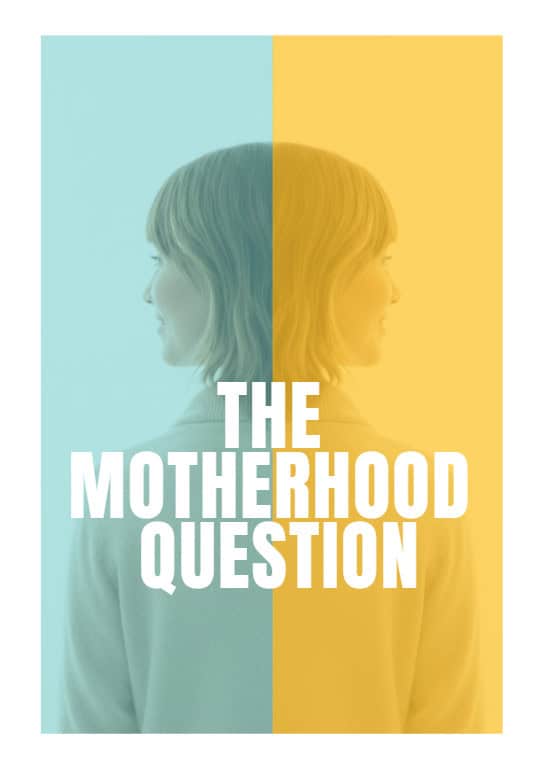
That’s why I created The Motherhood Question workbook. Not to convince you either way, but to help you hear your own voice beneath all the noise.
You can find it here: www.themotherhoodquestion.com
But whether you use the workbook or not, please give yourself permission to take your time with this.
The answer will come. And when it does, it will be yours.
Sophie van het Erve is a leadership and life coach based in Portugal. After her own journey through adoption, fertility treatments, and pregnancy loss, she created The Motherhood Question workbook to help other women navigate this profound decision with clarity and self-compassion. Connect with her on LinkedIn.