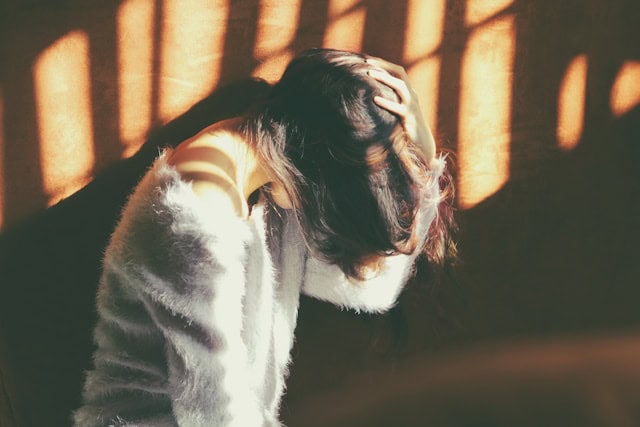
In 2020, during lockdown, my migraines got too much to handle. One late morning, after my 8th grade English class on Zoom, I closed my Chromebook and stood up to let our new puppy out. Without warning, my legs shook violently. Light faded. My ears rang. I woke on the ground with my brother standing over me. I didn’t know you could pass out from migraines—turns out you can.
According to Cleveland Clinic, five percent of American children experience migraines by the age of 10. That number jumps to 28% by the teen years. Many drug treatments—like Calcitonin Gene-Related Peptide (CGRP) inhibitors—aren’t approved for minors, so there’s no real treatment if you’re a kid. Migraines are notoriously underdiagnosed among children. When I had my first, around the age of five, my family doctor insisted it was all in my head. I couldn’t possibly know what I was talking about. I hadn’t experienced real pain.
The problem is that migraines are debilitating, yet they’re different for everyone—and children lack the words to voice the pain. When they try, no one listens. In my case, the doctors’ visits and medications consumed years of my life. I had migraines for three years before I was finally diagnosed at the age of eight. The treatment? “Give her Advil.” The diagnosis was easy to accept; the fact there was no treatment wasn’t. The blurry spots in my vision and the ringing in my ears made it hard to concentrate. In school, the flickering fluorescent lights and the screaming children on the playground were too much to handle. The stress of a times-table test would trigger a migraine, and I never got past my sevens. I just wanted to be normal. I didn’t want to close my eyes and cover my ears to endure each day, but that’s what I learned to do.
I stopped being able to leave my pitch-black room. The rustle of pages turning or a house finch cheeping outside my window was enough to set me off. Even sleep couldn’t stop the pounding. For years, I woke each day and went to bed with the same migraine. My pleas for the pain to stop fell on deaf ears.
When passing out became a regular thing for me, my family knew something had to change. We went back to the doctors, and I saw a neurologist. The first medication seemed to help. I went from daily migraines to only two or three a week. The drugs worked until the tics began. I had been on the medication several months, when I would involuntarily wince and yip. Soon, I had tics every few seconds, and I could no longer read a book, listen to music, or even finish a sentence.
So, we tried again. They weaned me off that medication, and the tics subsided. I did well on the next drug—Nortriptylin—and had fewer migraines, but again there were side effects. In high school gym class, I had to run the mile. This was a big part of my grade, so I ran. When I reached the finish line ten minutes later, everyone else was comparing times. They had already recovered, but my heart was pounding out of my chest. I checked my Apple Watch. My heart rate was 210 beats per minute. I called my mom immediately and she rushed me to the emergency room. The doctors told me nothing could be done; I was still under eighteen.
I tried everything else: megadoses of B2 and magnesium, soaking my feet in hot water, scarfing cashews or almonds, and inducing a brainfreeze. My neurologist and I finally decided enough was enough. I was about to turn eighteen, so they weaned me off my current medication. It took me three months of withdrawals—vertigo, brain fog, and gallons of Pedialyte—to get back to normal.
Now, I give myself a shot every month just to function, but I wouldn’t have it any other way. I have never felt as good as I do now. Only this year did federal law recognize migraines as a disability, so accommodations are available for children who can’t be treated. That’s a good first step. Kids should be taken seriously; they’re not just seeking attention. No one knows their bodies as well as they do, and the adults in their lives should shut up and listen.
Every day is still a battle for me, and I have occasional migraines when the shots wear off, but I am grateful for the lessons I have learned. Yes, my head hurts, but that motivates me in other areas of life. I’ve learned to manage my discomfort so I can accomplish all that I hope to do.