Sleep quality depends on your circadian rhythm and sleep drive—the environment you’re in, and the habits you’ve developed affect both. Here are seven ways to improve your sleep environment for quality, uninterrupted sleep.
Get Your Bedroom Temperature Down to About 65°F
A drop in core body temperature signals to your brain that it’s time to sleep. The Sleep Foundation recommends lowering your bedroom temperature to about 65°F (18°C). Light matters too, as they produce heat. Nightlights should be dim, low, and amber or red.
Keep the Air Clean and Fresh
Air goes stale overnight in a closed room. Every breath you exhale adds carbon dioxide. Turning on the AC makes the room feel cool and dry, but it recirculates the same air. Carbon dioxide keeps rising.
The fix is fresh outside air. Studies show that cracking a window already reduces carbon dioxide levels by half. If you run AC at night, air out the room first. Open a window for a few minutes before bed, then close it up and turn the AC on.
Some window units have a vent setting that pulls in outside air. If yours doesn’t, crack the bedroom door or open the window again for a few minutes if you wake up.
Use Products That Help You Sleep Better
Good sleep is worth the investment. One of the best products to invest in for better sleep is a weighted blanket. Studies have even shown that people with insomnia slept better with it.
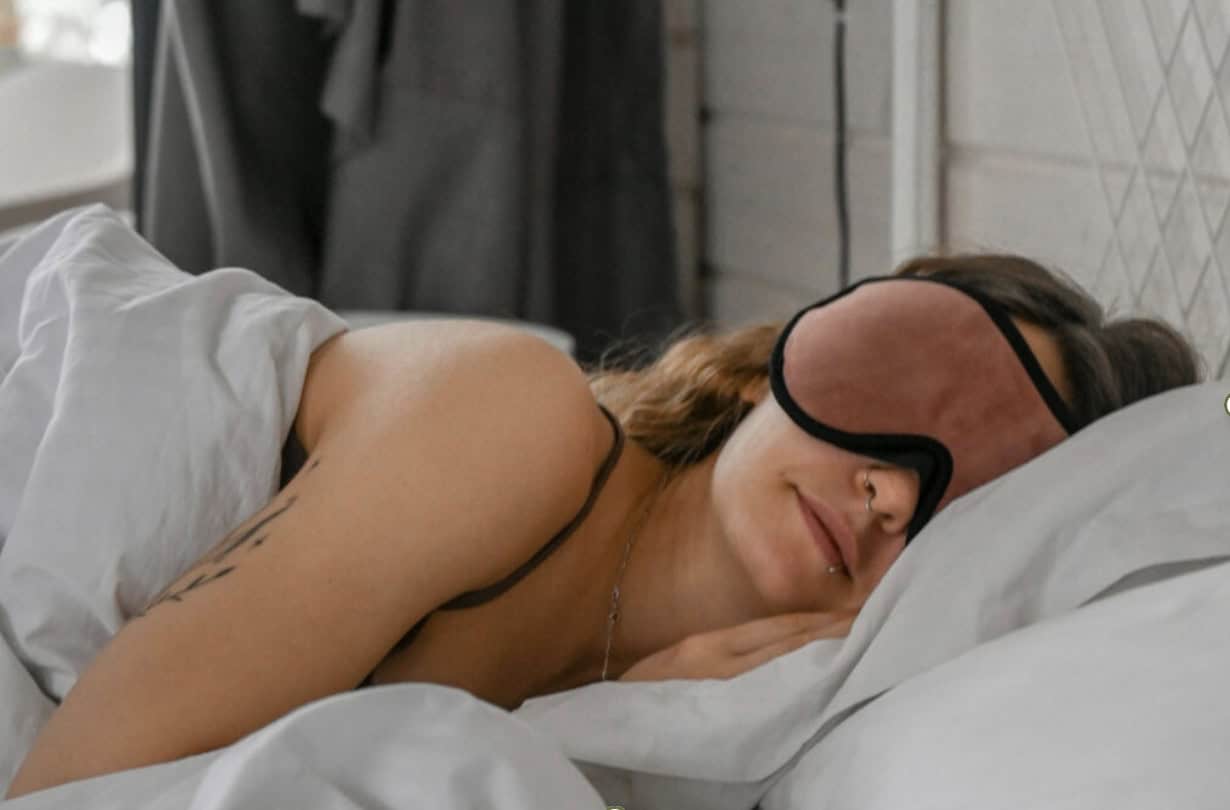
Eye masks help too, especially if you’re on the night shift. Using eye masks at night is even better. In 2023, Cardiff University conducted a study suggesting that wearing an eye mask overnight led to better memory and alertness the next day.
People working night shifts should also invest in blackout curtains and earplugs. Sleeping in the day messes up your circadian rhythm even if you’re “used to it.” You have to trick your brain into thinking it’s dark out.
Upgrade Your Mattress and Pillows
Another product worth the investment is mattresses and pillows. Old, worn-out mattresses can cost you sleep and back pain. Most mattresses need replacing every 6 to 8 years. If you notice sagging, squeaking, or pain every morning, it might be a good time to replace it soon.
Make Your Sleeping Area Only A Sleeping Area
Habits are a big factor in your circadian rhythm and sleep drive. You have to make it a habit to only sleep and rest in places where you’re supposed to sleep and rest. Don’t spend time doom-scrolling, playing games, or binging Netflix in your bedroom.
If you have a tiny apartment, make your bed a sleep-only area. This enforces a habit in your brain that once you’re lying down, you’re supposed to fall asleep.
Make Sleeping Environment as Peaceful as Possible
You experience deep sleep when your brain works off the adenosine it’s built up all day. Noise pulls you out of that even without waking you. According to the World Health Organization, noise levels as low as 45 decibels already cause health problems. For context, 45 dB is as loud as:
- A refrigerator hum (about 40 dB).
- A dishwasher running (45 to 65 dB).
- Normal conversation is (65–80 dB).
Earplugs are the simplest fix. In a 2026 University of Pennsylvania study, 25 adults slept in a lab while recorded aircraft noise played. Earplugs protected most of their deep sleep. What didn’t help were sounds from “sleep apps.” People lost REM sleep and spend more time awake.
Address Snoring and Teeth Grinding
About 936 million adults worldwide have obstructive sleep apnea (OSA). Loud snoring is one of its most common signs. About 1 in 8 adults grinds or clenches their teeth in their sleep. Watch for these signs:
- Loud snoring, or a partner who notices you stop breathing
- A sore jaw or headache when you wake up
- Teeth that look flatter or more worn than they used to
A dentist can fit a custom night guard to protect your teeth. For snoring, ask about an oral appliance and whether you need a sleep study. You can also try a bamboo mouth tape. But make sure you can breathe through your nose first.