Breathing easily is a simple step that can often lead to a comfortable night’s sleep. Products like nasal strips and mouth tape may seem like simple fixes when you find your nose clogged or have a dry mouth upon waking.
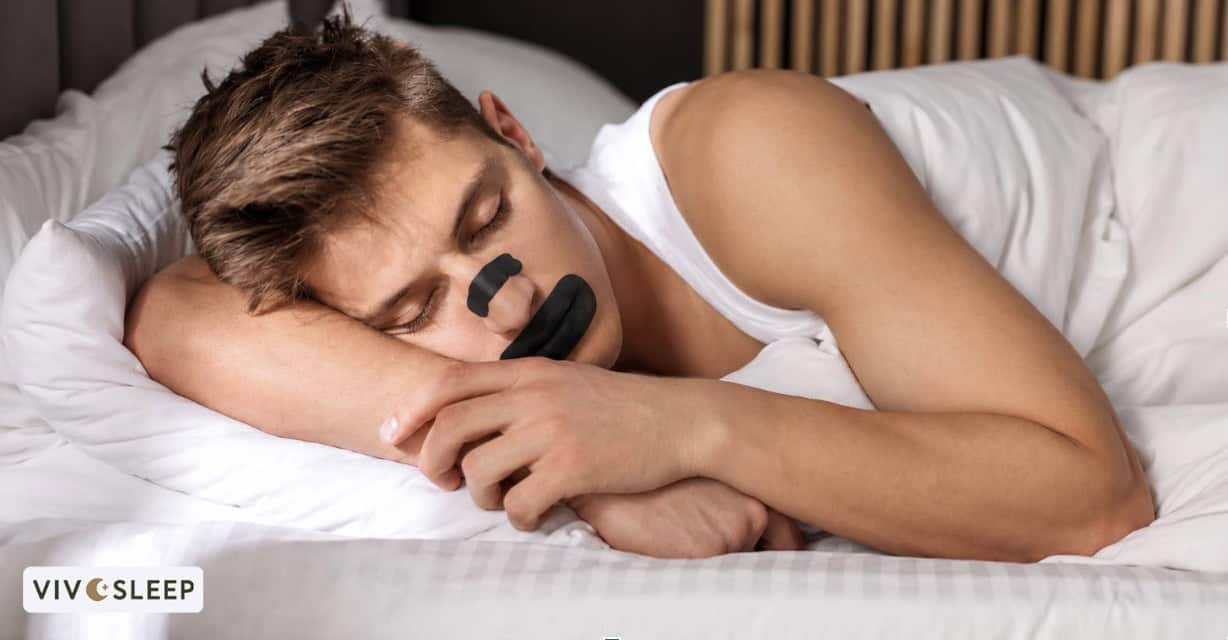
Both are popular for bedtime, but they’re used in different ways. Nasal strips are meant to help stretch the passages of the nose outwards. Mouth tape, however, helps keep the lips closed, allowing for nose breathing.
The deciding factor is safety. Nasal strips tend to be the safer choice for those who are suitable to use them, and mouth taping may not be safe for individuals who may not breathe through their nose easily or those who have certain sleep-related breathing disorders. It is important to know what these products are, when to skip them, and when to seek medical help before adding them as part of your nighttime routine.
What are Nose Strips and Mouth Tape?
While both are linked to breathing at night, they are concerned with different things.
Nose Strips Support Nasal Airflow
Nose strips are strips of flexible adhesive that are placed over the outside of the nose. Their spring-like tension gently lifts the sides of the nose, helping open the nasal valve area for easier airflow. This may make nasal breathing feel easier for people with mild narrowing.
They do not treat every type of nasal blockage or sleep-related breathing problem.
Mouth Tape Promotes Closed-Lip Breathing
Mouth tape is a sticky product that is attached over the lips to prevent opening the mouth while sleeping. It is often recommended due to dry mouth, snoring or wanting to breathe through the nose. Mouth tape differs from nasal strips in that it does not open up the nasal airway. Covering the mouth could obstruct an important alternative route of breathing if it becomes difficult to breathe through the nose. There is limited research that has been conducted on its efficacy and long-term safety.
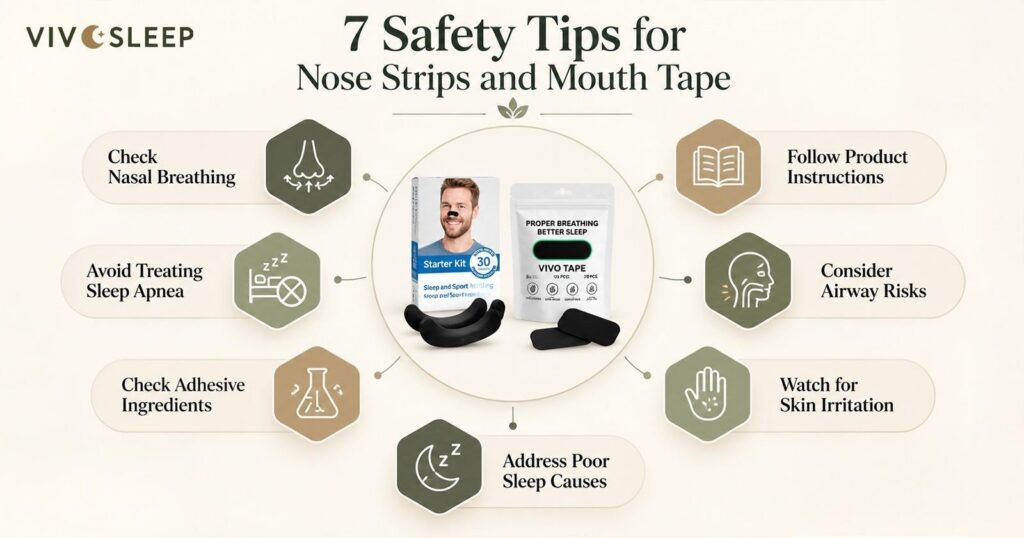
7 Safety Tips Before Using Nose Strips or Mouth Tape at Bedtime
Nose strips and mouth tape serve different purposes, so using them safely starts with understanding how each works. Before adding either to your bedtime routine, follow these seven safety tips to protect your skin, support comfortable breathing, and know when to stop using them.
1. Check Whether You Can Breathe Comfortably Through Your Nose
If you are thinking of using a product to promote nasal breathing, take note of the ease in which air flows through both nostrils. Nasal breathing may be challenging due to a cold, allergies, inflammation of the sinuses, nasal polyps, or some structural blockage.
If you find that you regularly have trouble breathing out of your nose, don’t tape your mouth shut and consult a health care provider about the problem. A nasal strip may ease mild nasal valve narrowing, but not every type of blockage.
2. Avoid Self-Treating Snoring or Sleep Apnea with Mouth Tape
Snoring isn’t necessarily a harmless phenomenon. If a person snores loudly and often, with gasping, choking, or pauses in breathing, this can be related to obstructive sleep apnea.
Mouth taping is not a proven sleep apnea treatment. Taping the mouth can make breathing harder if the airway problem is elsewhere.
If you have symptoms you think may be sleep apnea, talk to a doctor instead of relying on a bedtime accessory.
3. Check Adhesive Materials Before Using on Skin Surface
Both products contain adhesives that may irritate sensitive persons. You can place nasal strips on clean, dry, intact skin. Avoid areas with cuts, rashes, sunburn, or existing irritation. Individuals who are allergic to adhesives should look carefully at the product literature. Never believe that a product labelled ‘gentle’ or ‘skin-friendly’ will be appropriate for all.
4. Follow Product Instructions and Avoid Improvised Materials
Use nasal products in the position recommended by the manufacturer. The nasal strip may not be as effective if it is positioned too high or too low. Never use household tape, packaging tape or other tapes not made for skin on the lips.
Perhaps, more importantly, it is not enough to have a product on the market for sleep to prove that mouth taping is safe for a person. Consult a trained clinician for advice before using.
5. Avoid Mouth Taping When Breathing or Airway Risks Are Present
Mouth taping can be especially worrisome in individuals with nasal obstructions, suspected or diagnosed sleep apnea, and diseases that prevent them from reacting to breathing problems. It is also not suitable if there is a risk of vomiting or aspiration or if someone may not be able to get the tape off quickly enough.
Mouth tape for sleep should not be used by children unless directed and supervised by appropriate health care professionals. When breathing is becoming difficult, the product shall be immediately removed and help sought when needed.
6. Pay Attention to Skin Irritation and Discomfort
The nasal strips can also lead to redness, itching, or discomfort, especially if they are used over long periods of time. Carefully remove the strip based on the manufacturer’s instructions. Never pull too hard on sensitive skin.
Discontinue use if irritation occurs and let skin heal. Any discomfort, anxiety, or restricted breathing should not be disregarded in order to stick to a sleep routine.
7. Pay Attention to the Cause of Poor Sleep, Not Just the Symptom
Dry mouth doesn’t always call for mouth tape, and not all snoring improves with a nasal strip. These can be caused by nasal allergies, dry indoor air, medication side effects, sleep position, and sleep-disordered breathing.
Once the cause is identified, a more suitable solution may be found, rather than continually swapping bedtime products.
When Can Nose Strips Help?
Nose strips could be considered if there is a mild constriction around the nasal valve which makes it difficult to breathe through the nose. An external nasal dilator, for instance, might help someone who experiences slight resistance when breathing through the nose find it easier to breathe if they use it.
They can also be used to temporarily relieve congestion in some instances. But the outcome of the problem will be different depending on the cause. Nasal strips are not proven to stop snoring or treat sleep apnea. Those who are interested in using nasal strips for sleeping can check the features and instructions for use before they decide whether it suits them.
Why Mouth Taping Requires Greater Caution
In many cases, mouth taping is advertised via social media as a means to help promote nasal breathing, decrease snoring, or improve sleep quality. There is limited scientific evidence supporting these claims.
Research in the area of mouth taping and associated oral-occlusion practices is limited in size and scope, and results are inconsistent, according to a 2025 systematic review. It also raised concerns regarding possible risks, especially if nasal obstruction is present. The full review is available on PubMed Central.
One of the main concerns is that if the nose becomes blocked during sleep, the body may need to breathe through the mouth. Tape can interfere with that backup route. Therefore, taping the mouth should not be regarded as a standard health-care regimen without taking into account a person’s breathing health.
If you are comparing options, VivoSleep’s mouth tape for sleeping page explains its design and intended use. It is not a substitute for medical advice.
Which Bedtime Habits Should You Try First?
If the purpose of the adhesive breathing accessory is to correct a sleep problem, first think about making other changes in the environment or activities that may solve the problem.
- Control nasal allergies: If it is suspected to be related to allergies, consult a health care professional for treatment advice. Controlling the cause rather than covering the mouth might be more helpful.
- Consider saline nasal care: Saline sprays can be used to help with nasal dryness and/or mucus accumulation. If a nasal rinse is used, use safe water and according to product directions.
- Check your sleep position: Some people find that sleeping on their side lessens snoring, but it cannot be used as an alternative to sleep apnea treatment.
- Be mindful of bedroom air: Dry air can cause discomfort to the nose or throat. Use a humidifier and clean it regularly to avoid microbial growth.
- Maintain a consistent sleep schedule: Although not directly addressing an airway blockage, regular sleep and wake times aid healthy sleep habits.
The above steps are designed for those who may have different causes of discomfort at bedtime and are not meant to be intended for all people.
When Should You Seek Help From a Healthcare Provider?
Some breathing and sleep issues require more than a bedtime change. Consult a healthcare specialist if you have any of the following:
- Loud or persistent snoring, especially with witnessed breathing pauses
- Gasping or choking during sleep.
- Recurring headaches in the morning or a lot of daytime sleepiness
- Ongoing nasal obstruction, particularly on one side
- Ongoing breathing problems at night
- Persistent dry mouth despite changes to your routine
Final Thoughts
Both nose strips and mouth tape are bedtime accessories that seem similar but have different effects on breathing. Nose strips can help to gently expand the nasal opening and can help some feel breathing easier. Their main drawbacks are skin irritation and limited effect on some blockages.
Mouth tape helps keep the lips closed, but it does not open a blocked nose. Its benefits are not well established, and there is potential for risks associated with its use for breathing, which warrant much greater caution.
The first step in a safe choice for a good night’s sleep is to get comfortable breathing at night and to understand what is causing that. If snoring, congestion, or dry mouth is chronic, it is more important to find out what is causing the problem than to use tape to treat the symptom.
Sleep should be consistent, and a healthy sleep pattern should not interfere with breathing.
Frequently Asked Questions
Are Nose Strips Safe to Wear Every Night?
Nose strips are typically safe to wear on healthy skin, as directed. Discontinue use if redness, irritation, or adhesive sensitivity occurs.
Do Nose Strips Help With Snoring?
They might be useful to some individuals with snoring that is linked to constriction of the nasal valve but effectiveness can vary. They are not a treatment for obstructive sleep apnea.
Can Mouth Tape Stop Mouth Breathing?
Mouth tape does not solve the issue of why a person breathes through their mouth, it merely prevents the mouth from opening. Nasal ventilation might not be adequate, and it can be unsafe
to restrict breathing.
Can I Use Nose Strips and Mouth Tape Together?
Some adults use both, but only when nasal breathing is already clear and comfortable. Try the nose strip alone first, and remove the tape if breathing feels restricted.
Should I Use Mouth Tape When My Nose Is Blocked?
No. If nasal breathing is blocked, mouth taping can cause breathing problems. Solve the congestion or consult a doctor if it doesn’t go away.
Will Nose Strips Work for Sleep Apnea?
Nasal strips do not replace medically recommended treatment of sleep apnea and may make some users feel the air passing through the nose is easier to breathe.
What Should I Do if Snoring Continues?
Persistent loud snoring with gasping, pauses in breathing or daytime sleepiness should be medically evaluated to determine if there is sleep-disordered breathing.